Montmartre can be a memorable stop when you are visiting Paris with a dog, but it is not the easiest neighbourhood to navigate. The hill combines cobbles, steep streets, stairs, crowds and very little spare pavement around its busiest sights. This dog-friendly Montmartre guide helps you choose a calmer route, avoid the least practical sections and keep the walk comfortable for both of you.
Is Montmartre dog-friendly?
Montmartre is best treated as a neighbourhood walk rather than a dog park. Dogs can accompany you on public streets, but each garden, café and attraction has its own rules. The main thing to plan for is not distance: it is the combination of slopes, crowds and narrow pavement.
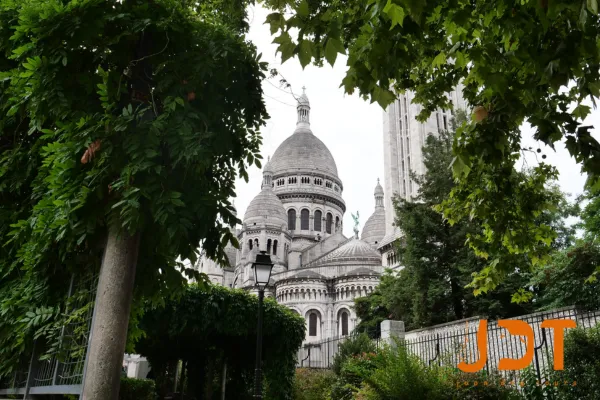
Do not plan your route through Square Louise Michel below Sacré-Cœur. The City of Paris currently lists it as not admitting animals, and its central approach is also one of the hill’s steepest stair sections. Stay on the surrounding streets instead and follow entrance signs wherever you stop.
When to go with a dog
- Best time: early morning, when pavement space is easier to manage and you can pause without blocking other visitors.
- Use extra care: from late morning through the afternoon, especially around Sacré-Cœur, Place du Tertre, the funicular entrance and the photo spots near Rue de l’Abreuvoir.
- Warm weather: bring water, take shade breaks and choose a shorter loop. Cobblestones and exposed slopes can be tiring for small, senior or heat-sensitive dogs.
- Rain: slow down on polished stone and sloping cobbles; a harness gives more control than a collar if your dog pulls.
An easier dog-friendly Montmartre route
For a gentler first visit, start around Abbesses and keep the walk on streets with options to shorten it. RATP identifies Abbesses on Line 12 as the closest Métro stop for Montmartre; before travelling, read our Paris Métro with a Dog guide for carrier, leash and muzzle rules.
1. Start at Place des Abbesses
Give your dog a few minutes to settle after the journey, then keep to the quieter side streets rather than heading straight toward the Sacré-Cœur stairs. This is a useful point to decide whether your dog is relaxed enough for the hill on that day.
2. Use streets, not the main stair approach
Take the route at your own pace through the village streets and turn back whenever the pavement becomes too busy. The goal is not to complete every famous viewpoint. A calmer, shorter walk is usually more enjoyable than forcing a dog through the dense steps around the basilica.
3. Keep Place du Tertre and Rue Norvins short
These are iconic but often crowded. Keep your dog on a short lead, avoid letting the leash cross foot traffic and move on if the space feels tight. Do not expect an off-leash break in Montmartre: plan that separately at one of the areas in our Best Dog Parks in Paris guide.
4. Pause around Rue de l’Abreuvoir, then choose your exit
Rue de l’Abreuvoir and the streets around La Maison Rose are beautiful for a brief, quiet stroll when they are not crowded. From here, choose the downhill route that suits your dog rather than retracing the steepest climb. If your dog is tiring, end the walk early and use a public-transport option after checking the current rules.
Stairs, cobbles and the funicular
Montmartre’s famous steps are not a good default route for every dog. They can be physically demanding, slippery after rain and difficult to share with heavy pedestrian traffic. The funicular may look like an easy alternative, but animal-access rules and service conditions can change. Check the operator’s live information before relying on it, and keep a street-based alternative ready.
For a dog that dislikes steps, has mobility needs or is still settling into city travel, choose the lower streets, take more breaks and skip the highest viewpoint. This is a sightseeing walk, not a challenge course.
Cafés, water and practical stops
Only use a terrace or café after asking the staff; dog policy varies by venue and by how busy it is. Our dog-friendly cafés in Paris guide is the better place to plan a proper stop than relying on a busy Montmartre terrace.
- Bring your own water and collapsible bowl.
- Keep waste bags ready: the hill has limited room to step aside.
- Use a secure harness and a lead short enough for crowded pavements.
- Do not enter gardens, church interiors or attractions with your dog unless the entrance rule clearly permits it.
Who will enjoy this walk?
Montmartre is a good fit for a social, city-confident dog and an owner happy to adapt the route. It is less suitable for a dog who needs a quiet, open off-leash space or cannot manage uneven ground. In that case, choose a park first and leave Montmartre for a short early-morning walk.
Frequently asked questions
Can I walk my dog around Montmartre?
Yes, on public streets with good lead control. Treat individual gardens, cafés and attractions as separate decisions and follow the signs at every entrance.
Are there dog-friendly parks in Montmartre?
Do not assume the gardens around Sacré-Cœur admit dogs: Square Louise Michel is currently listed by the City of Paris as not admitting animals. For an exercise break, use a dedicated canine area instead.
What is the easiest way to reach Montmartre with a dog?
Abbesses on Line 12 is the closest Métro station according to RATP. Check the current conditions and dog-transport rules before your journey, then choose a street-based route that avoids the main staircase.
Can my dog go off leash in Montmartre?
No. Montmartre’s public streets are busy and unsuitable for off-leash exercise. Use an authorised canine area or designated freedom zone instead.
Explore Paris at your dog’s pace
Want a dog-friendly Paris walk built around your dog’s pace, rest needs and confidence in the city? Explore our Paris for Dogs walking experience for local guidance, planned pauses and a route designed for travelling with a dog.
Information checked in August 2026. Local signs, venue policies and transport service conditions take priority.