

Traveling to France with a dog can be a wonderful experience, but the easiest trips begin well before departure. Entry documents depend on where your journey starts, transport companies have their own pet policies, and everyday life in Paris requires a little planning around crowds, heat and limited access to some attractions.
This guide gives you a practical starting point for bringing a dog to France and enjoying Paris together. Regulations can change and individual circumstances differ, so confirm the latest requirements with your veterinarian, transport company and the official French or EU authorities before you travel.
Quick Checklist Before You Travel
Start preparing early, especially if you are entering the European Union from a non-EU country.
- Confirm that your dog has an accepted microchip or other valid identification.
- Check that the rabies vaccination is valid and correctly recorded.
- Obtain the correct pet passport or animal health certificate for your route.
- Check whether a rabies antibody titration test is required for the country you are travelling from or transiting through.
- Verify your airline, ferry or train operator’s current pet policy.
- Confirm your accommodation accepts your dog and ask about size limits or additional charges.
- Pack medication, veterinary records, food, water, a normal leash, waste bags and a comfortable muzzle if required.
- Save the contact details of a veterinarian near your accommodation.
Entering France From Another EU Country
For normal non-commercial travel between EU countries, dogs generally need valid identification, a current rabies vaccination and a valid European pet passport. The passport records the animal’s identity, microchip or qualifying tattoo, health information and rabies vaccination.
The EU rules normally cover private journeys with no sale or transfer of ownership. They generally allow up to five dogs, cats or ferrets per traveller, with limited exceptions for registered competitions, exhibitions or sporting events.
Check the official EU pet travel guidance before departure because additional conditions can apply to particular routes and circumstances.
Entering France From a Non-EU Country
The process can be more detailed when arriving from outside the European Union. Depending on the country of departure and any transit countries, your dog may need:
- an ISO-compliant microchip;
- a valid rabies vaccination completed after identification;
- an EU animal health certificate issued through the appropriate official process;
- a rabies antibody titration test when travelling from certain countries;
- supporting declarations or evidence for specific transit situations.
French Customs states that travellers arriving in the EU from a third country must declare and present their pets for documentary and identity checks. The owner, or an authorised person, should normally travel with the animal. For dogs, cats and ferrets, a limited separation of up to five days may be accepted when supported by travel evidence.
The requirements are route-specific. Use the current French Customs procedure for travelling with a dog, cat or ferret, and speak to your veterinarian well in advance. Do not rely only on an airline check-in agent to confirm entry compliance.
Microchip, Rabies Vaccination and Documents
Identification and rabies documentation must match. Check the microchip number on every form before leaving the veterinary clinic, including spaces and individual digits.
For many first rabies vaccinations, a waiting period applies before travel. A booster given after the previous vaccination has expired may be treated differently from an uninterrupted booster, so confirm the timeline with the veterinarian completing your paperwork.
Keep the original documents in your hand luggage and carry digital copies as a backup. A phone photo is useful if papers are misplaced, but it does not necessarily replace the required original certificate or passport.
Restrictions for Category 1 and Category 2 Dogs
France applies special rules to certain dogs classified as Category 1 or Category 2. French Customs states that Category 1 attack dogs are prohibited from importation. Category 2 dogs may enter only when the applicable conditions are satisfied.
These classifications are based on breed, pedigree and physical characteristics, so owners of dogs resembling American Staffordshire terriers, Mastiffs, Tosas or Rottweilers should obtain route-specific advice before booking. Do not assume that registration or legal status in another country automatically satisfies French requirements.
Flying, Trains and Public Transport

Government entry permission and transport-company acceptance are separate issues. A dog can meet the legal entry requirements and still be refused by an operator if the carrier, weight, muzzle or booking rules are not met.
Airlines and International Trains
Check the policy for the exact carrier and service number before paying for a non-refundable ticket. Ask whether the dog travels in the cabin, in the hold or through a specialist cargo process, and confirm carrier dimensions, weight limits and advance reservation requirements.
Recheck the policy shortly before departure. Equipment and documentation accepted by one operator may not be accepted by another.
Paris Public Transport
RATP states that small animals can travel free on its bus, tram and Metro networks when transported in a suitable basket or bag. Larger dogs are accepted only within the Metro or rail network when muzzled and kept on a leash. Assistance dogs are subject to separate provisions.
Read the current RATP rules for travelling with an animal before your journey. A dedicated guide to using the Paris Metro with a dog will be added separately so this page can remain focused on the complete travel process.
What to Pack for a Dog-Friendly Trip
A practical dog travel kit should include:
- original travel and veterinary documents;
- a secure harness and normal leash;
- a comfortable muzzle, even if you do not expect to use it often;
- food for the first part of the trip and a small supply for delays;
- water and a collapsible bowl;
- regular medication in its original packaging;
- waste bags;
- a towel for rain, muddy parks or swimming;
- a familiar blanket or lightweight bed;
- an identification tag with a reachable phone number;
- a recent photo of your dog.
Bring familiar food rather than assuming the same brand or recipe will be available immediately in France. Sudden changes combined with travel stress can cause digestive problems.
Keeping Your Dog Comfortable in Paris
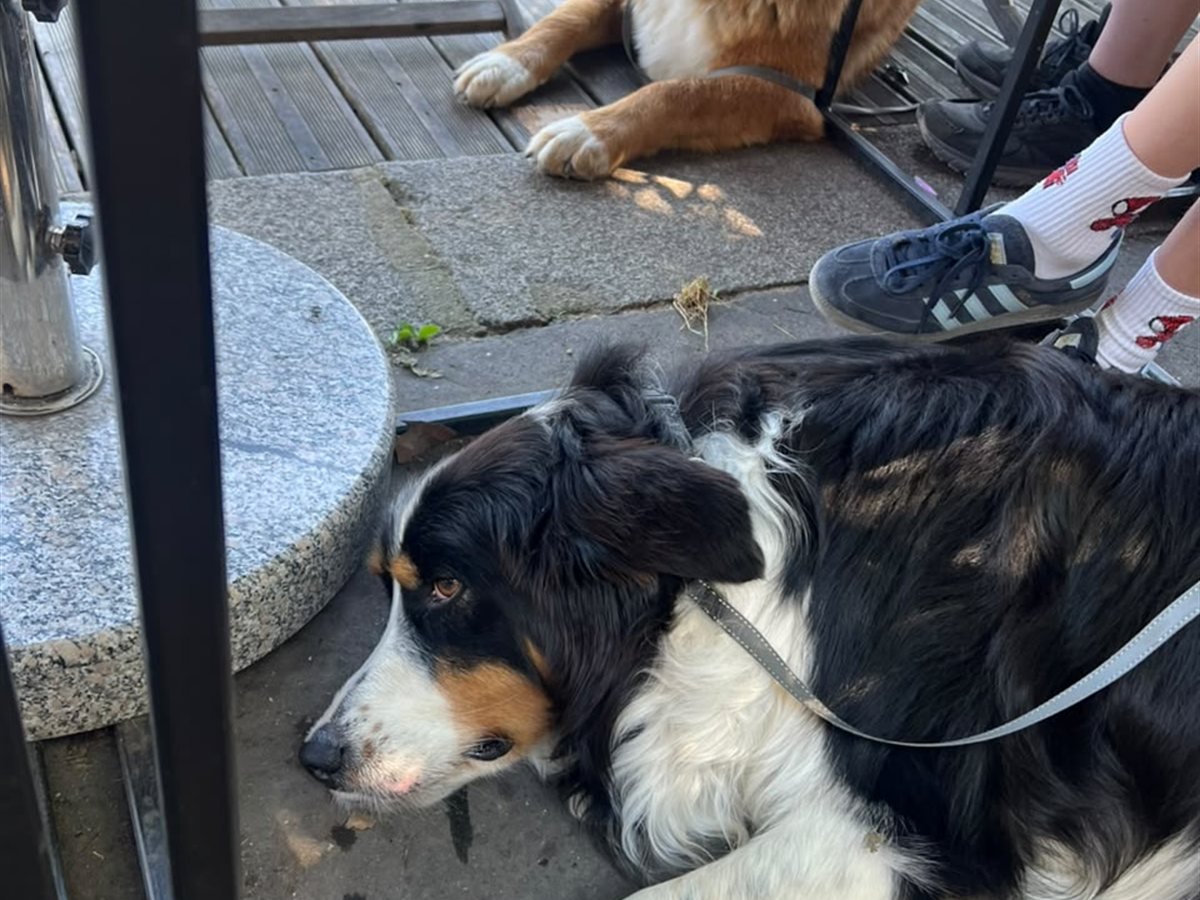
Paris is walkable, but pavements can become hot in summer and busy areas may be overwhelming. Plan shorter outings, use shaded routes, carry water and avoid the hottest part of the day. In crowded areas, keep the leash short enough to prevent your dog from stepping into bicycle lanes or approaching strangers unexpectedly.
Not every park allows dogs, and off-leash access is limited to designated areas. For location-specific ideas, see our guides to dog-friendly parks for scenic walks in Paris, fenced and off-leash dog parks and the Bois de Boulogne dog agility area and lake walk.
If Your Dog Becomes Ill or Is Lost
Do not use the French police emergency number as general veterinary advice. Before travelling, save the contact details and opening hours of a veterinary clinic near your accommodation and identify a genuine 24-hour veterinary service for out-of-hours care.
If your dog is lost, contact the identification database linked to the microchip, nearby veterinary clinics and the relevant local authorities. Keep the microchip registration and your contact details current before departure. Ask your insurer or assistance provider whether veterinary treatment, transport or repatriation is covered.
If a person is in immediate danger, use the appropriate French emergency service. A medical emergency involving a person and a veterinary emergency involving an animal require different services.
Enjoying Paris With Your Dog

A successful day in Paris does not need to include every landmark. Choose a manageable route, schedule water and rest stops, and give your dog time to sniff and decompress. Outdoor cafés, riverside walks and spacious woodland areas can be easier than crowded indoor attractions.
If you would like a route adapted to your group and your dog’s pace, explore our Private Paris Tour with Dogs and Picnic. The itinerary and walking speed can be adjusted, and the picnic is included unless you prefer an alternative.
Frequently Asked Questions
What documents do I need to bring a dog to France?
The answer depends on the country of departure. Common requirements include accepted identification, a valid rabies vaccination and either an EU pet passport or an EU animal health certificate. Some routes also require a rabies antibody titration test or additional declarations.
Does my dog need a microchip to enter France?
In most ordinary travel situations, dogs must have accepted identification. An ISO-compliant microchip is the standard method. A clearly readable tattoo made before 3 July 2011 can still qualify in limited circumstances when supported by evidence.
Can dogs use public transport in Paris?
Small animals can travel on RATP services in a suitable bag or basket. Larger dogs are accepted only on the Metro or rail network when muzzled and leashed. Check the latest RATP and operator rules before travel.
Are dogs allowed in Paris parks?
Rules vary by park and by section. Some parks prohibit dogs, some require a leash, and designated freedom areas permit off-leash exercise. Always follow the signs at the entrance.
How early should I prepare for the trip?
Begin as early as possible. Some routes require vaccination waiting periods, official certificates or a rabies antibody test that cannot be completed at the last minute.